
One flexible interface, many devices
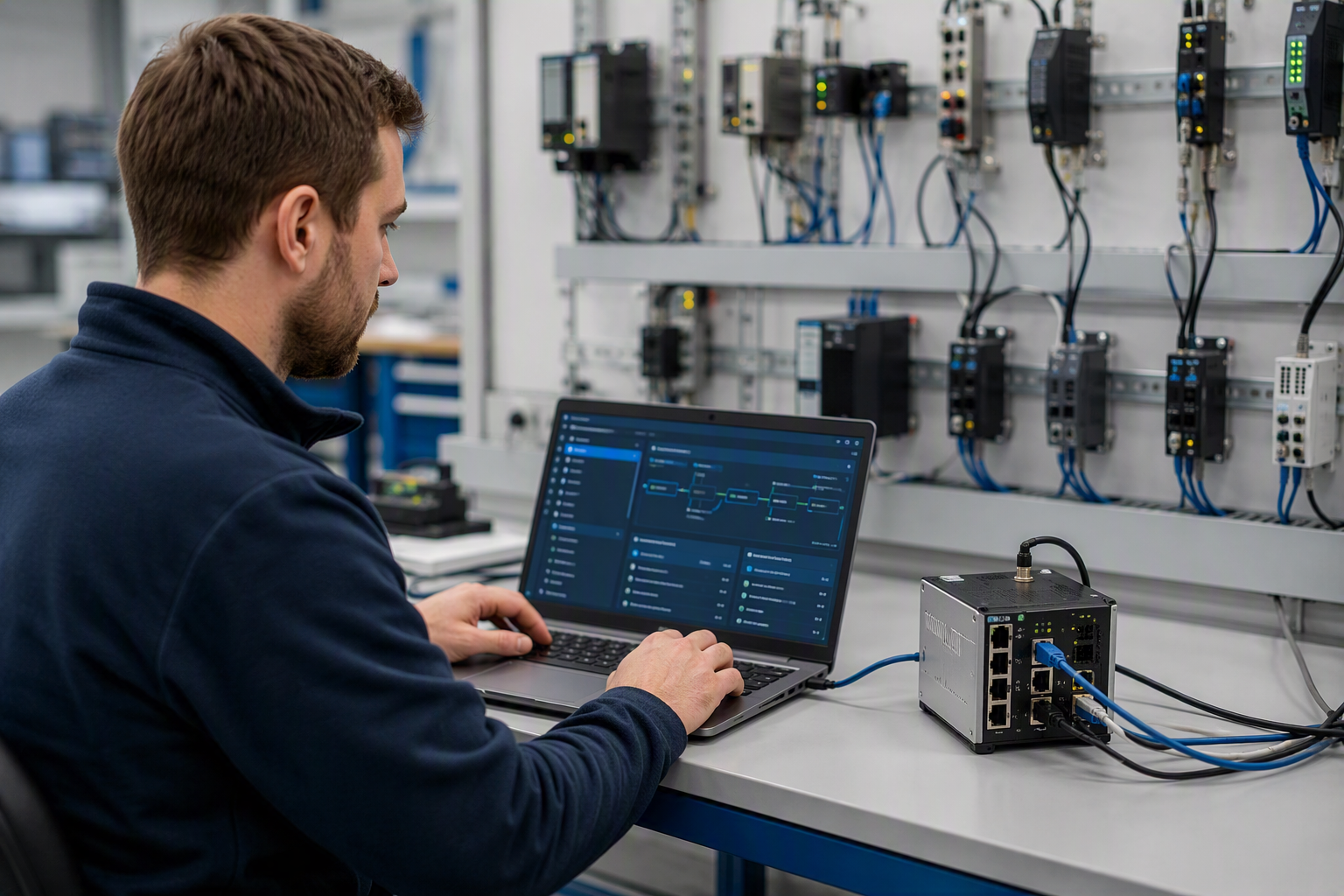
Rather than giving each device its own bespoke interface, the solution offers device configuration and a status overview of every component, built on the HATEOAS concept combined with a single-page frontend, and aimed primarily at device operators in both production and development use. That generic approach is what lets one piece of software serve a whole family of devices instead of a single model.
Configurable branding — and its complexity
A distinguishing feature is configurable corporate branding: a company that purchases and rebrands the device can have the software's design adapted to match its own brand. That flexibility adds real complexity, because each such company can also have its own data structure that must be displayed correctly within a defined API and architectural rule set — and handling that cleanly, without the interface becoming a tangle of special cases, was central to the work. A related sub-project, an IoT device manager, provides generic software for managing IoT devices from different manufacturers with parameter read and control functions.
Technology
The frontend is built with React and a component library on a HATEOAS architecture, with Python for newer devices and C/C++ for older ones; the IoT device manager uses React, ProtoBuf, Cypress and Material UI over a .NET backend.